Since the Counter-Strike 2 release, players have had many questions related to trading in-game items. What's up with the CS2 skin market — one of the most popular questions. The short answer: the market is alive, developing, and continues to grow, but has become much more volatile than in CS:GO times. Reasons lie both in global gameplay changes and in player, trader, and Valve's own behavior. Below we'll break down all aspects in detail.
How Is the CS Skin Market Structured Today?
To understand how the CS skin market functions, you need to consider several levels at once: Steam's official marketplace, third-party platforms, and trading within the community. Valve provides players the ability to buy and sell items through the Steam CS skin market, but with limitations: you can't directly exchange money, and 15% of the transaction amount goes to platform commission. This makes the Steam market less flexible but safer and more stable.
As of late 2025, the average daily turnover on Steam's marketplace exceeds 5 million dollars, and some cases and stickers are resold hundreds of times per day. This emphasizes the scale and constant activity on the Steam CS2 skin market, despite the high commission.
What Affects Skin Prices in CS2?
Skin pricing is a separate ecosystem. Here it's important to consider several factors at once:
Item rarity (Mil-Spec, Restricted, Classified, Covert).
Skin condition (float value).
Presence of stickers.
Weapon popularity in meta.
Collection history — whether it currently drops or has been removed from circulation.
Trends — visual crafts, collections by colors, themes, or memes.
For example, after CS2's release, many players massively switched to AWP | Chromatic Aberration, as this skin looks impressive with new graphics. Its cost rose from $2.3 to $25 on the CS skin price market, and demand remains stable.
How Did CS2 Impact the Market Compared to CS:GO?
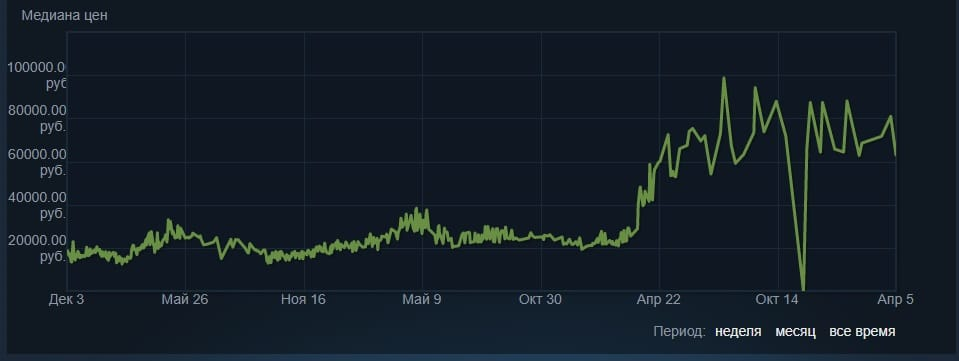
The transition to Source 2 engine and Counter-Strike 2 launch became a turning point for the entire in-game item economy. What's up with the CS2 skin market became obvious literally in the first weeks: the market began behaving unstably, and prices for many positions went up. This is primarily related to the fact that player inventories were fully transferred, but visual perception of skins changed radically.
New graphics, reworked lighting, and improved texture quality strongly affected the appearance of even familiar items. Some skins that were considered dull in CS:GO sparkled with new colors in CS2 — especially those with bright neon shades or high contrast. Visual advantage immediately reflected in demand and prices. As a result, the CS skin market received a new wave of interest from both old and new players.
The biggest changes affected collections that had long remained in the shadows. Example — the Prisma 2 collection: before CS2's release, AK-47 | Phantom Disruptor in Factory New condition held at $3.50, but after the update it rose to $6+, thanks to more expressive color rendering and weapon popularity in meta. Conversely, skins with muted palettes began losing value as they looked less expressive on updated maps.
Special attention should be paid to cases. Many old cases — such as Clutch Case, Spectrum 2, and Glove Case — nearly doubled in price. The reason is they contain items with unique visual effects: gloves, popular skins, and patterns that look especially impressive on the new engine. Players began opening these cases more often, thereby increasing demand and raising prices on the CS:GO skin market.
Below are key changes caused by the transition from CS:GO to CS2 that affected trading dynamics and skin perception:
Increased visual value of popular skins. New lighting made bright and contrasting skins more attractive, raising demand for them.
Growing interest in old cases. Items from Clutch, Glove, and Spectrum cases proved especially winning in new graphics.
Devaluation of some collections. Cases with outdated textures (Fracture, Snakebite) began losing community interest, and their cost dropped by half.
Shift in craft priorities. Players began choosing not just rare but visually compatible skins, strengthening the aesthetic component of trading.
These changes clearly show how important visuals are in price formation. Even without new collections or updates, the CS2 skin market reacts to aesthetics and player reactions, not just rarity logic or item meta-value.
If current trends continue, we can expect further price growth for bright and impressive skins, especially from discontinued collections. This means CS2's visual update affected the market not as a short-term shock but as a full shift in pricing logic.
Volume Growth: Charts and Activity
If comparing trading statistics before and after transitioning to CS2, you can see how activity changed according to third-party analytics services:
According to Steam data, the number of transactions increased by more than 70% in the year after CS2's release. This confirms: the CS2 skin market chart shows steady growth despite local dips.
CS Skin Market Capitalization: Real Value
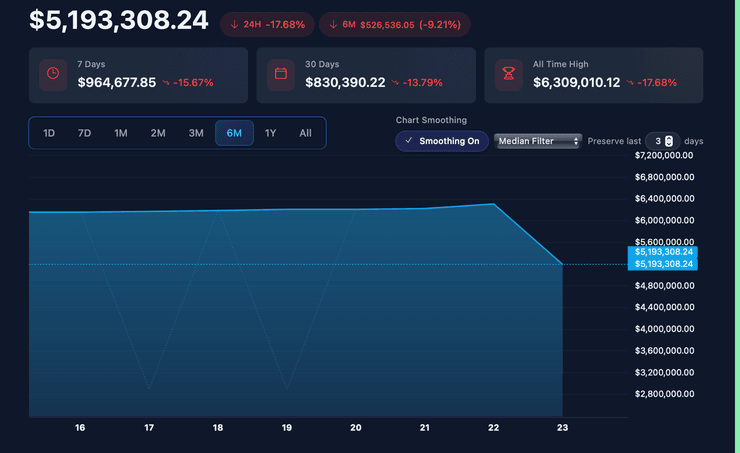
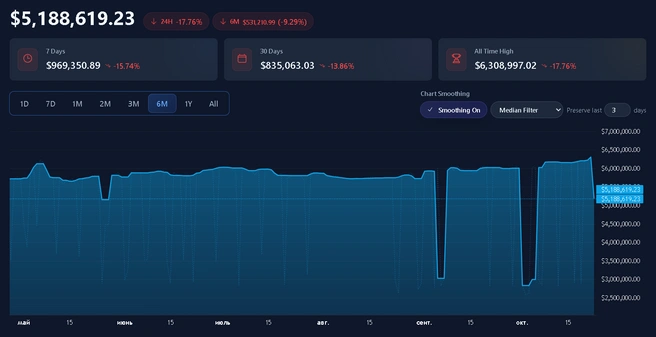
In 2025, the topic of in-game item capitalization ceased being an abstraction. Today, CS skin market capitalization is measured in billions of dollars, and this isn't an exaggeration. According to analyst estimates, total market volume fluctuates from $3.5 to $4.0 billion. This is comparable to the global collectible card industry and has already surpassed some cryptocurrencies in daily transaction volume.
The main driver isn't just regular players buying skins for pleasure but an increasing number of investors. They view skins not as decoration but as assets capable of preserving or even multiplying their value over time. Moreover, this isn't theory but a practical approach that has long proven effective through the rarest items.
There are several factors forming capitalization and determining CS skin market stability as an investment environment:
Rarity and irreproducibility. Many skins and stickers will never drop again — this applies, for example, to stickers from Katowice 2014 or Bravo and Cobblestone cases.
History and collectible value. Items associated with specific tournaments, teams, or game meta-periods have historical significance.
Limited supply. Unlike real goods, skins aren't subject to additional issuance — if a collection is removed from circulation, the number of copies is limited forever.
Community recognition. Some items, like Dragon Lore or M4A4 | Howl, became iconic — and demand for them holds even during overall activity decline.
Against this backdrop, investors increasingly choose CS as an alternative asset. Example — Titan (Holo) | Katowice 2014 sticker, which costs from $25,000 to $32,000 on the CS skin market depending on quality. Moreover, it doesn't depreciate even during general market correction periods. Its price has held stable for over five years.
It's important to understand that capitalization isn't built only on legendary items. Daily turnover is formed through mass trading: cases, stickers, mid-tier skins like AK-47 | Redline or USP-S | Cortex. It's precisely these daily operations that maintain overall trading volume and CS2 skin market liquidity.
Thus, in 2025, the skin market is no longer just in-game cosmetics but a full digital economy. It lives by its own laws, reacts to trends, is controlled by both demand and faith in digital property. And if Valve continues supporting this ecosystem's stability, CS skin market capitalization will only grow.
Where Do Beginners Most Often Make Mistakes?
Even in 2025, despite the CS skin market becoming more open, many players continue making the same mistakes. This is especially noticeable among beginners who've just started figuring out trading mechanics. Reasons are simple: a skin may look beautiful but not match its price or market demand. And in conditions of instability and volatility after transitioning to CS2, risks became more tangible.
One main problem is the desire to quickly buy a "trending" skin without understanding the nuances. As a result, many overpay 2-3 times just because the item appeared in a popular streamer's video or during hype. Such situations are easily avoided if understanding which parameters to pay attention to when buying.
Below are the most common mistakes made by inexperienced participants trading on the Steam CS2 skin market:
Buying skins at inflated prices during hype. Often happens after an update release or video from major bloggers — prices briefly skyrocket then sharply fall.
Ignoring float parameter. Many don't check the item's actual condition, resulting in getting a skin with heavy wear despite "Factory New" status.
Focusing only on appearance. Without considering demand and liquidity, a skin can be hard to sell even if it looks aesthetic.
Buying cases without analyzing drops. Players invest in cases with low drop value without checking collection composition and rare item drop chances.
Each of these mistakes can result in losing $20-50, sometimes more. To avoid such situations, you need to at least minimally study the CS skin price market and rely on data from verified platforms like Steam Market.
Players who approach trading with a cool head and use analysis tools almost always win long-term. While impulsive purchases most often lead to financial losses and transaction disappointment.
How Have Popular Skin Prices Changed?
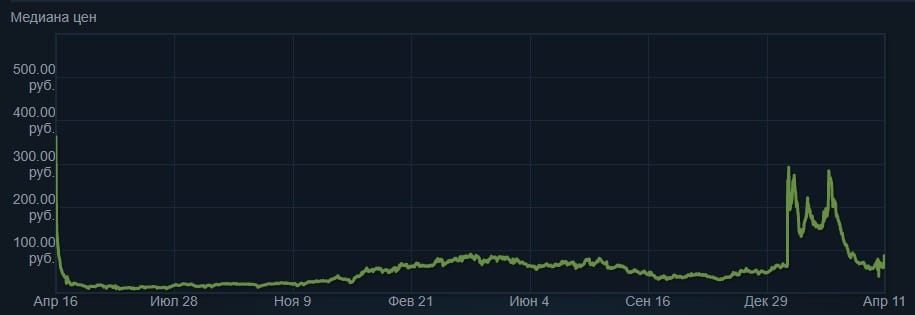
Some skins showed incredible growth with CS2's release. Examples:
The reason is growing interest in visuals, collection rarity, and turning off drops for old sets. This confirms stable interest from traders and collectors.
What's Up With Cases and Why Are They Getting More Expensive?
Cases in CS2 became not just a way to get skins but investment assets. Many players buy them by the dozens, expecting price growth. Clutch Case, for example, still cost $0.04 in 2022, and in 2025 — $0.70+. That's 1650% growth.
Main reasons:
Cases with rare loot no longer drop.
Gloves and knives from old cases are becoming rarer.
Hype around new collections creates speculative demand.
The CS skin market here directly depends on case inflation: the fewer items enter drops, the higher the trading price.
Forecast: Where Is the Market Heading?
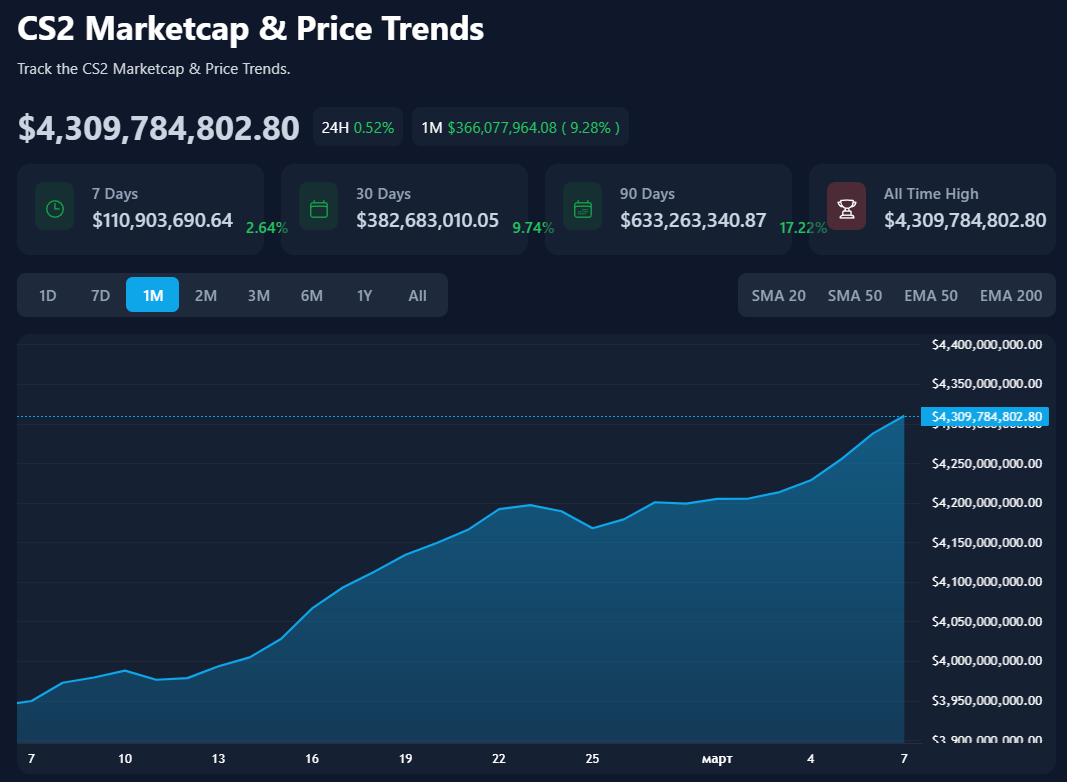
The market is currently in a stabilization phase. After recent Valve updates, players began approaching purchases more cautiously. Considering how Valve presents events, numerous reasons for a new interest surge may appear in coming months.
Should You Enter the Market in 2025?
Yes, but thoughtfully. The market has matured but retains an element of risk. For players wanting to beautifully customize weapons — everything is accessible and convenient. For those planning to invest — it's worth studying trends, charts, and trading history.
The CS skin market today isn't just entertainment but a full ecosystem with millions of dollars, living communities, and its own laws. And if you understand how it's structured, you can get both enjoyment and profit.