At some point, most players notice it: the matches have gotten worse. Teammates abandon games, toxicity is through the roof, and any semblance of coordination is completely gone. That's when the question of how to raise your Behaviour Score in Dota 2 becomes urgent – and how to finally climb out of that pit. The answer comes down to consistently earning commends, finishing your matches, and staying off the report radar. The score updates every 10 games, so expect the first real changes to show up after roughly 2–3 weeks of clean play.
What is Behaviour Score in Dota 2 and why does it actually matter?
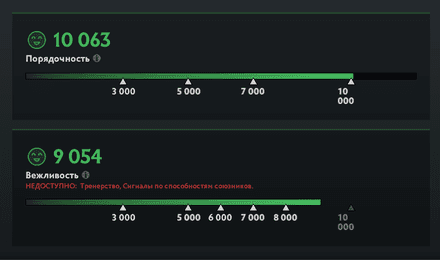
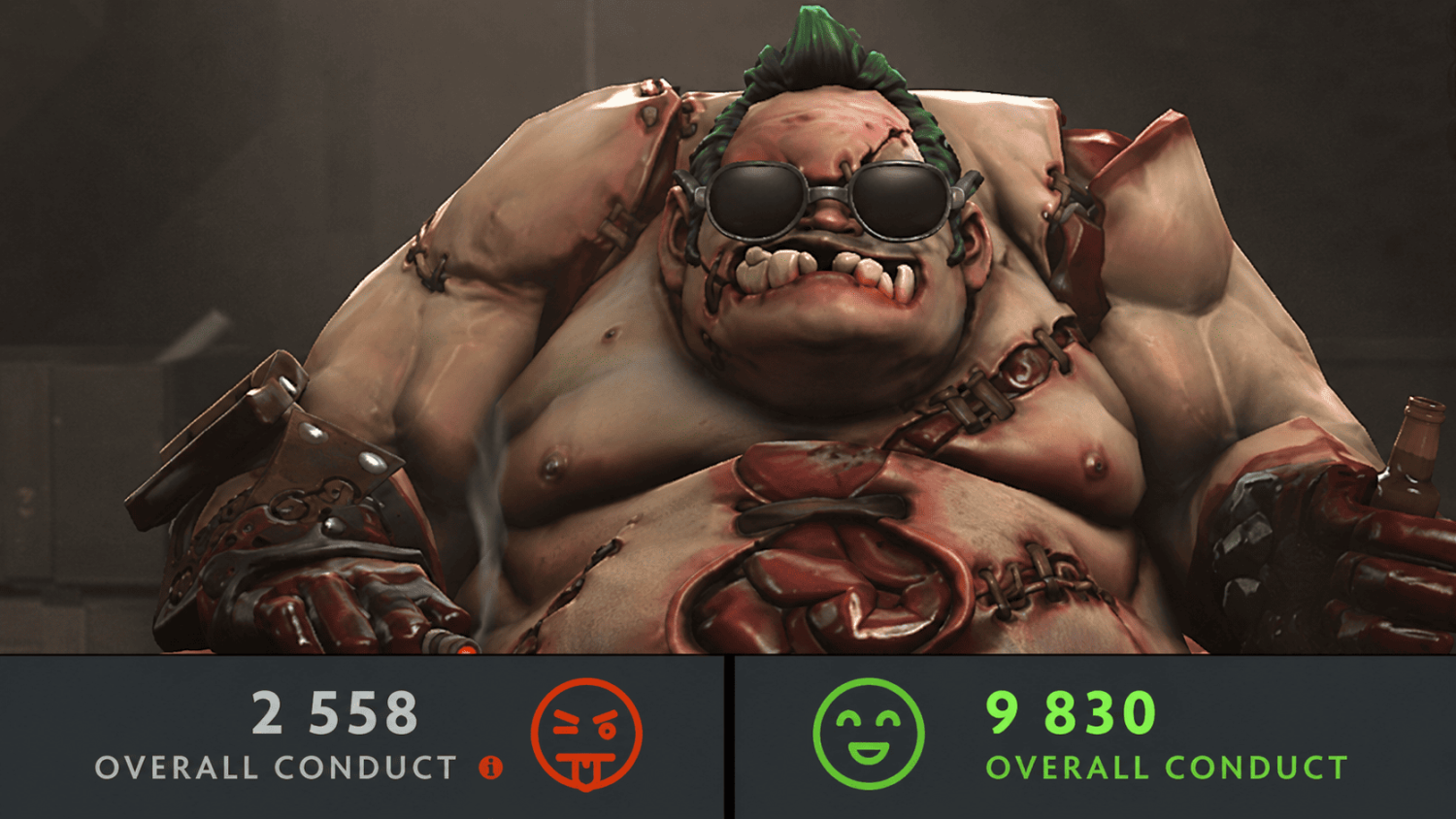
Behaviour Score is Valve's system for tracking how each player conducts themselves in-game. The scale runs from 1 to 12,000 – higher means a better reputation. The logic is straightforward: earn commends and your score goes up; rack up reports or abandon matches and it drops.
A lot of players dismiss this as purely cosmetic – something that doesn't actually affect gameplay. It does, and quite significantly. Behaviour Score determines who you end up playing with – it's essentially a second MMR, except instead of measuring skill, it measures conduct. The lower your score, the more likely you are to find yourself in a match with players who feed from minute one, scream in voice chat, and bail at the first sign of things going sideways.
How to check your current Behaviour Score
Before thinking about how to raise your Behaviour Score in Dota 2, it helps to know where you actually stand. Surprisingly, plenty of players haven't looked at this section in years and have no idea what their numbers look like.
You can check your score directly through the client – it takes under a minute. Here's how:
Launch Dota 2 and open your profile.
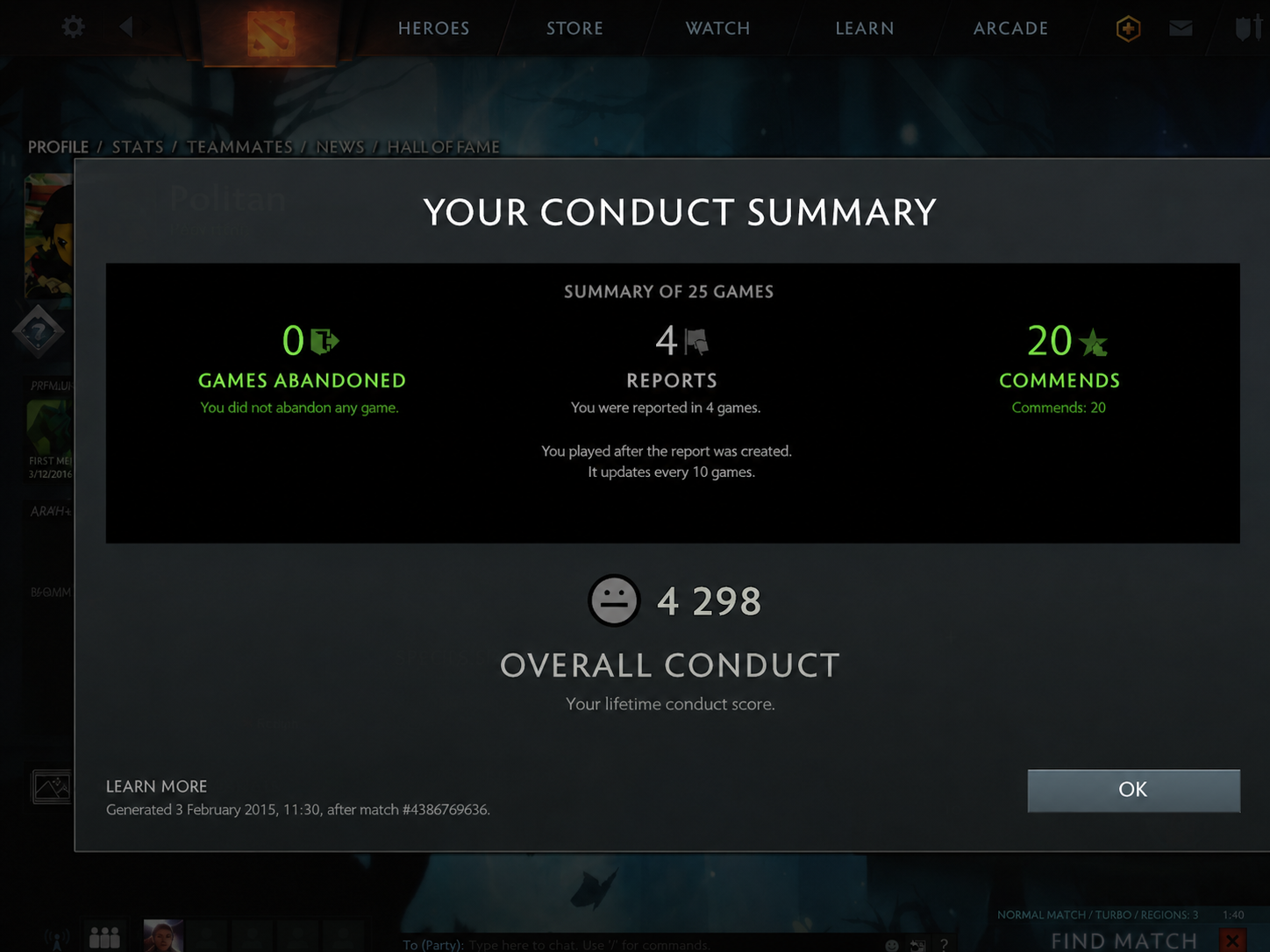
Click the Conduct Summary tab – it's in the lower left corner of the screen.
The window that appears will show your current Behaviour Score, alongside stats on abandonments, reports, and commends from your recent matches.
One detail a lot of players miss: the score doesn't update after every match – it recalculates every 10 games. Looking for changes right after one clean game is pointless. You need to complete 10 matches before the system registers any progress. This is exactly the kind of misunderstanding that kills motivation – a player puts in the effort, sees nothing change, and gives up.
What the different Behaviour Score ranges mean
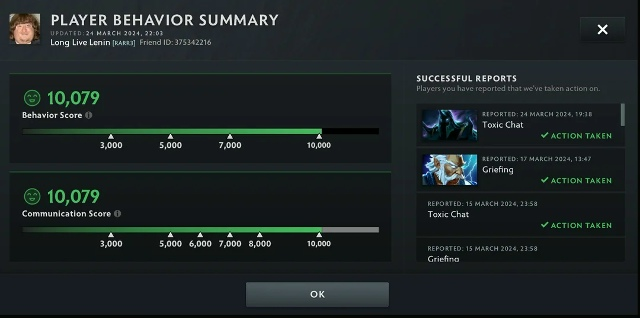
Behaviour Score isn't just a number sitting in your profile. Depending on which range you fall into, you either retain or lose access to certain in-game communication features. Valve designed it that way deliberately – communication restrictions are one of the primary penalties for poor conduct.
A player who can't use voice chat in a ranked match is a liability for the entire team, not just themselves. Coordination falls apart, teammates get frustrated, more reports pile up. The cycle feeds itself. This is precisely why Behaviour Score in Dota 2 affects not just your personal experience, but the outcome of matches as a whole.
What actually tanks your Behaviour Score
Before getting into how to improve your score, it's worth understanding exactly how it drops. This isn't vague – each type of behavior has specific numbers attached. The harshest penalty is abandoning a match before it ends: the system docks anywhere from 1,000 to 2,000 points for a single leave. That means one game you rage-quit in frustration can wipe out weeks of progress. Eight reports from other players cost 300–500 points – smaller on its own, but they add up fast.
Here are the specific actions that will reliably drag your score down:
Abandoning a match – 1,000 to 2,000 points per leave, the single harshest penalty in the system.
Getting reported by teammates – roughly every 8 reports cost 300–500 points.
Declining a match during the ready check – small, but real and tracked.
Playing with players who have very low Behaviour Scores – can drag your own rating down.
Spamming pings and flooding chat – not technically an insult, but reliably generates reports.
That last one catches people off guard. A player thinks "I didn't say anything offensive" – but if a teammate decided that the behavior was disruptive, the report still hits the system. Any conflict in chat, even technically civil ones, carries real risk to your score.
How to raise your Behaviour Score in Dota 2 – a step-by-step breakdown
Now to the main part. Actually raising your Behaviour Score in Dota 2 requires a consistent approach over several weeks – not a single attempt to "get through one game without blowing up." Each of the steps below works together with the others; in isolation, the effect is minimal.
Farm commends intentionally
Eight commends from teammates add 300–500 points – the direct mirror image of reports. Commends come from other players at the end of a match, so the goal is to create situations where they actually feel like giving them. The basics are enough: useful wards, supporting your teammates, keeping a calm tone and staying out of flame wars. Starting a match with a neutral or friendly message noticeably reduces the chance of early conflict – and teams that stay out of drama more often make it to the end without a meltdown.
Never abandon a match
This sounds obvious, but abandoning is the single biggest reason most players' scores are in the gutter. Even in a completely hopeless game, even when your teammates are already at each other's throats – you stay and finish it out. One abandon cancels out the gains from several good matches. This is the system's hardest rule, and it has no exceptions.
Mute instead of clapping back
When a toxic player shows up in your team, the instinct is to reason with them or fire back. Neither works: they get exactly the reaction they wanted, and now you're at risk of picking up a report for "participating in the conflict." The correct move is to hit mute and keep playing. The system will figure out who the source of the problem is – as long as you don't wade into the argument yourself.
Accept your match on time
A small detail, but a tracked one: declining during the ready check is still a penalty. Simple rule – if you queued, be ready to play right now.
Be mindful of who you party with
Playing with people who have significantly low Behaviour Scores can pull your own rating down. That's not a reason to stop playing with friends – but if someone is chronically stuck in the trenches, it's worth factoring that into how you plan your sessions.
All of these habits only work in combination. One polite game won't move the needle – you need a consistent pattern across 10–20 matches, and then the system will register the actual shift.
Can you raise your Behaviour Score in Dota 2 quickly?
Honest answer: there's no real shortcut. The score updates every 10 matches and the system is cumulative by design. But there is a strategy that genuinely speeds things up – especially when your score has already fallen very low.
If your Behaviour Score is in the 0–3,000 range, the best approach is to start with a few games of Turbo or matches against bots. These modes carry minimal risk of picking up reports, but they still count toward the 10-game update cycle. It lets you rack up the required games quickly without exposing yourself to further penalties in toxic ranked lobbies. After the first update, head back into regular modes and keep the streak going.
Realistic expectations for 2026: after 20–30 clean matches with no abandons or serious incidents, the quality of your games will noticeably shift – better teammates, actual coordination, lobbies without pointless flame wars. This tracks with the experience of thousands of players in official Steam discussions.
What is Communication Score and why should you track it?
Running in parallel with Behaviour Score is a separate system – Communication Score, introduced by Valve in 2023. A lot of players have never heard of it, then wonder why they suddenly got muted mid-match.
The two ratings operate independently, but each has its own consequences. Behaviour Score determines who you get matched with. Communication Score tracks the quality of your chat and voice interactions – and it's analyzed in real time, meaning a mute can land during an active game with zero warning. Your overall Behaviour Score can be completely fine while you still end up silenced at the worst possible moment.
You need to track both at the same time. The rules are the same: no flaming, no spam, only useful callouts. The difference is that Communication Score reacts faster and hits harder.
The most common mistakes that stall your progress
Even players who genuinely want to raise their Behaviour Score in Dota 2 tend to trip over the same things. Knowing about them in advance means not losing ground for no reason, and not scratching your head wondering why the score isn't moving.
One of the most underestimated mistakes is spamming "gg wp" after a teammate dies. The feature was designed to acknowledge good plays, but it's long since become a tool for mockery. Typing it after a death or a misplay is consistently read as toxic – and just as consistently earns a report. Another trap is ignoring Communication Score entirely while only watching Behaviour. Two ratings, two independent penalty systems – both need attention.
Here's what to cut out first:
Spamming "gg" at teammates after their deaths or misplays – it reads as rubbing it in.
Responding to bait in chat – even a measured reply can turn into a report.
Only tracking Behaviour Score and ignoring Communication Score.
Expecting instant results – the system updates every 10 matches, not sooner.
Playing on tilt – that's when most abandons and meltdowns actually happen.
Understanding these pitfalls doesn't just stop you from falling back – it lets you move forward much more consistently. Behaviour Score responds to patterns of behavior, not to one good evening.
Behaviour Score is an investment, not a punishment
The system works – and real experience backs this up. Players who've climbed from the 3,000–5,000 range to 8,000+ describe it as a complete transformation in how the game feels: reasonable teammates, functional coordination, matches that don't devolve into pointless arguments from the first pick.
Raising your Behaviour Score in Dota 2 doesn't mean becoming a saint and tolerating everything. It comes down to three things: don't abandon matches, don't start fires, and give the system enough time to build up a track record. In 2026, as Valve continues to develop its behavior analysis tools – including real-time chat review – the system only gets more precise and more effective.